Forgetting Gratitude
Without being prompted, couples often forget to express appreciation for small, everyday things.
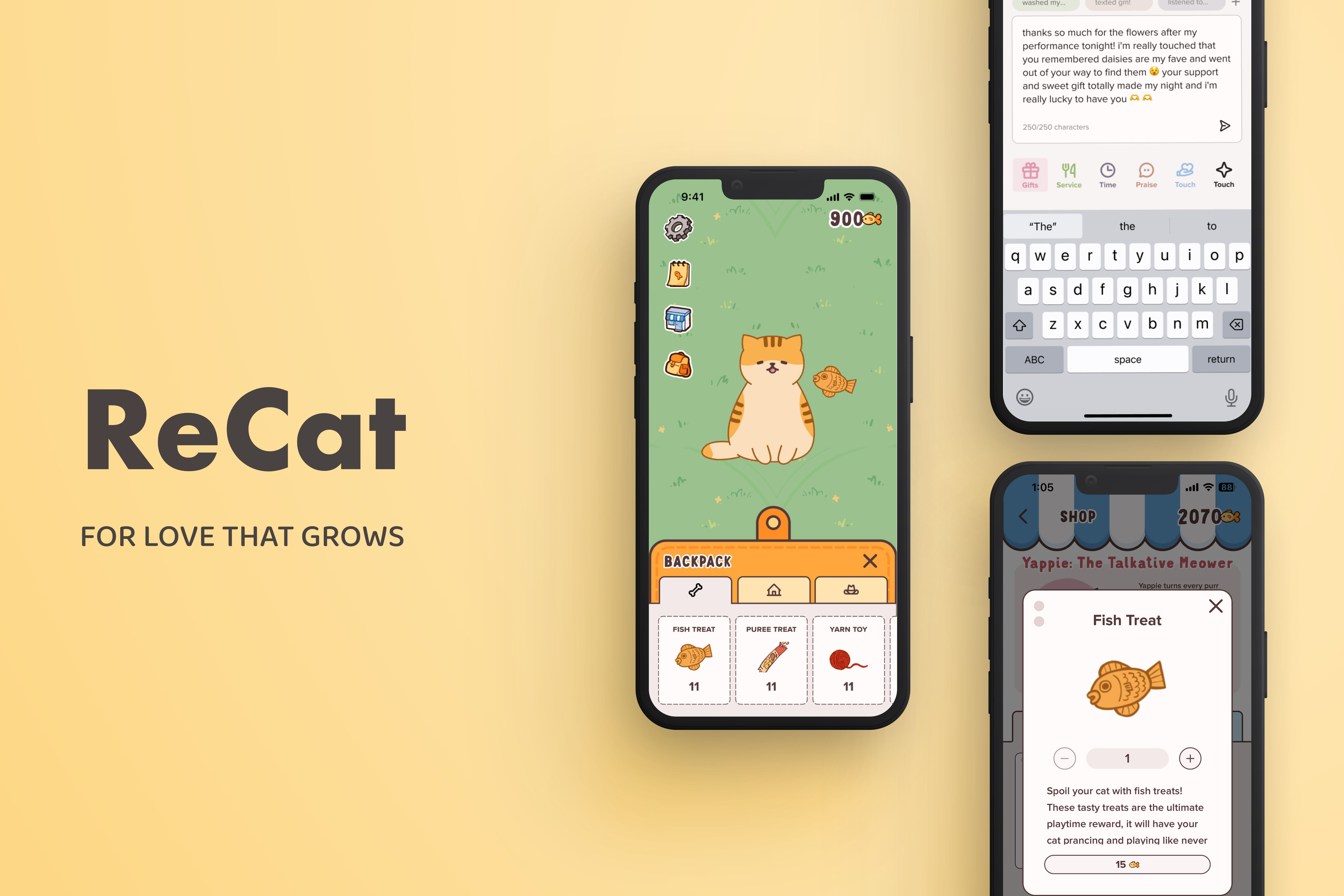
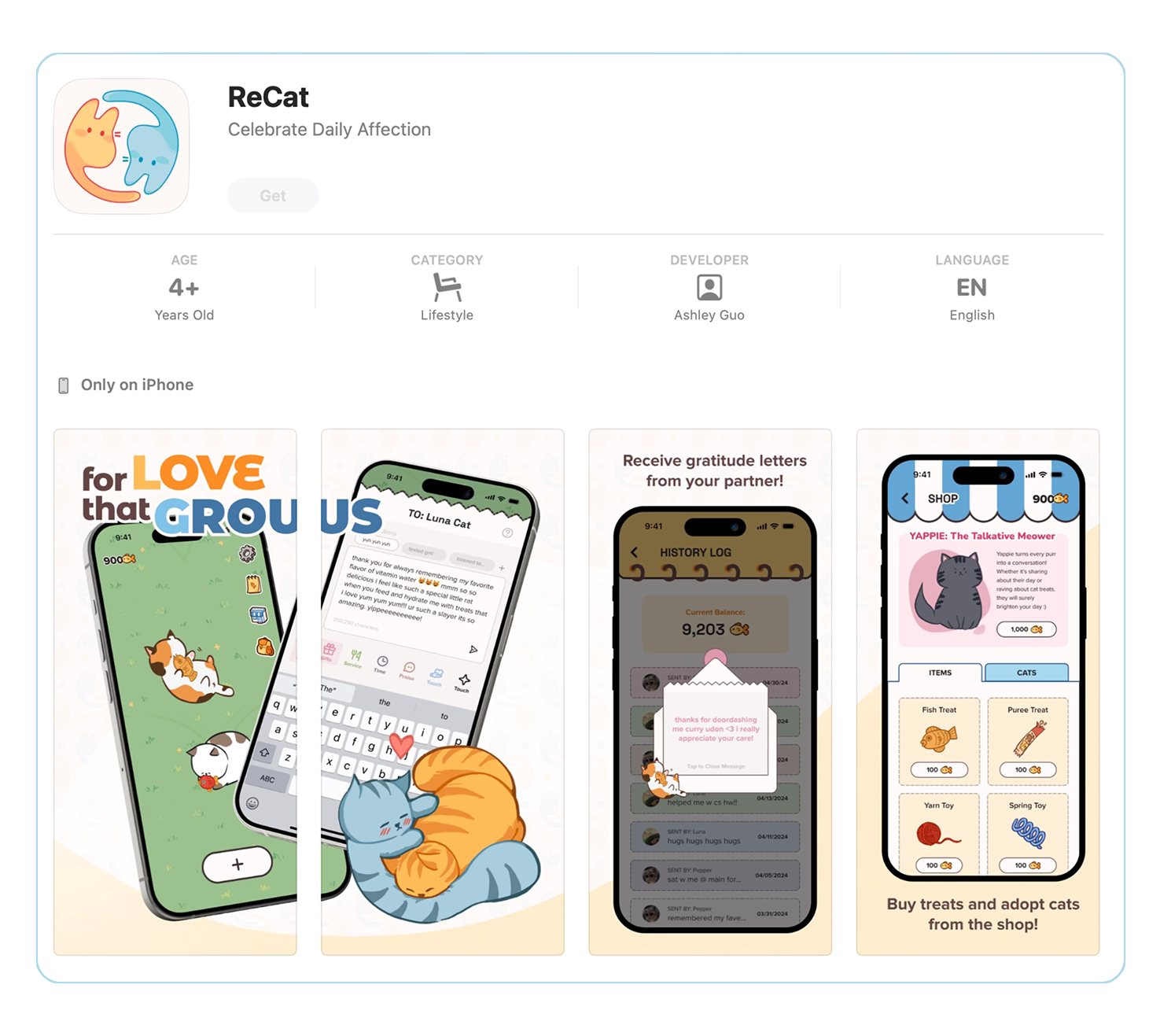
Recat is a platform designed to deepen emotional intimacy for Gen-Z and young adult couples. As a lead researcher and co-founder, I led the product from early discovery through a successful App Store launch. Our research identified that while communication frequency was high, depth was lacking. We solved this by reframing gratitude as a shared repeatable habit.
Lead UX Researcher, Co‑founder
10 months
7 members (Design, Engineering, Product)
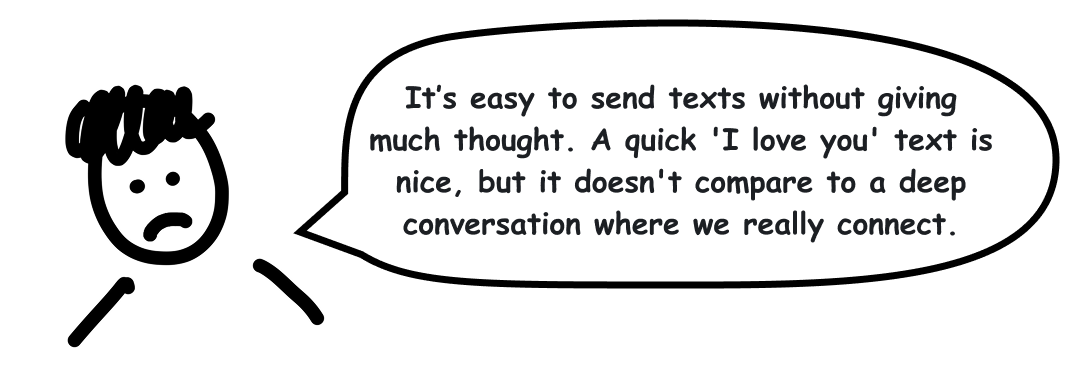
Digital communication is central to Gen-Z and young adult relationships, yet it often feels shallow. Texting is convenient, but it rarely supports the intentional connection needed for deeper emotional intimacy.
(30 min each, 4 rounds) mapping how people maintain emotional closeness online and what makes interactions impactful.
quantitatively validating patterns identified during qualitative discovery sessions.
conducted to evaluate early concepts and user flows, refining the experience of giving gratitude.
Partners overthink interactions and worry whether the other truly cares.
High-frequency messaging doesn't guarantee emotional connection. Interactions are often short and surface-level.
Focus on fostering meaningful, intentional interactions rather than the quantity of messages.
When apart, it's hard to verbalize feelings over text, leading to misunderstandings and frustration.
Texting can make vulnerability feel exposed and awkward. Without in-person cues, partners struggle to convey emotions fully.
Provide gentle support or shared activities to make emotional sharing feel easier and more natural.
People forget to acknowledge small gestures or struggles, leaving partners feeling unappreciated.
Even caring partners often skip expressing gratitude, which can erode closeness over time.
Create structured, simple ways to acknowledge small aacts and express appreciation.
Our interviews and secondary research revealed the importance of mutual appreciation in relationships.
BUT!
After testing prototypes with couples, we found that people often lose motivation to send gratitude. We realized that couples need a reason to come back and engage consistently.
Without being prompted, couples often forget to express appreciation for small, everyday things.
Interacting with something like a virtual pet gives couples a low-effort, emotional reason to return and do something together.
Once engaged, expressing gratitude becomes more natural and habitual on the app.
Send thoughtful notes of appreciation, for the smallest things!
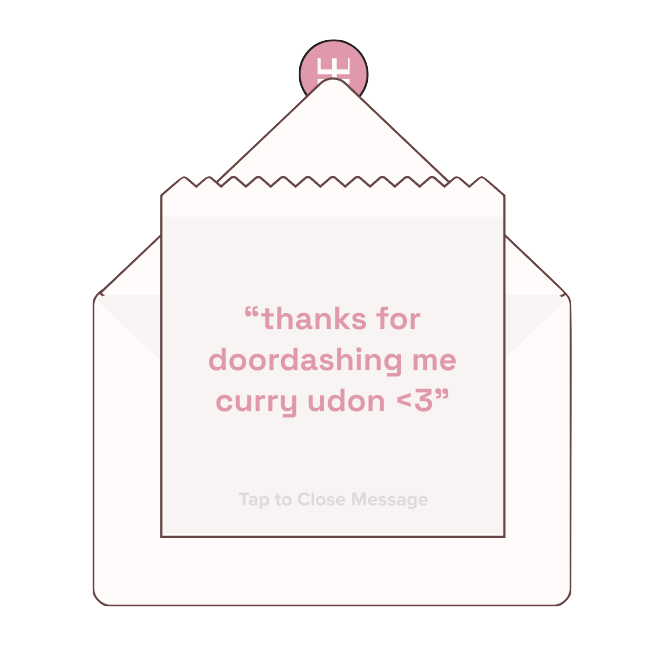
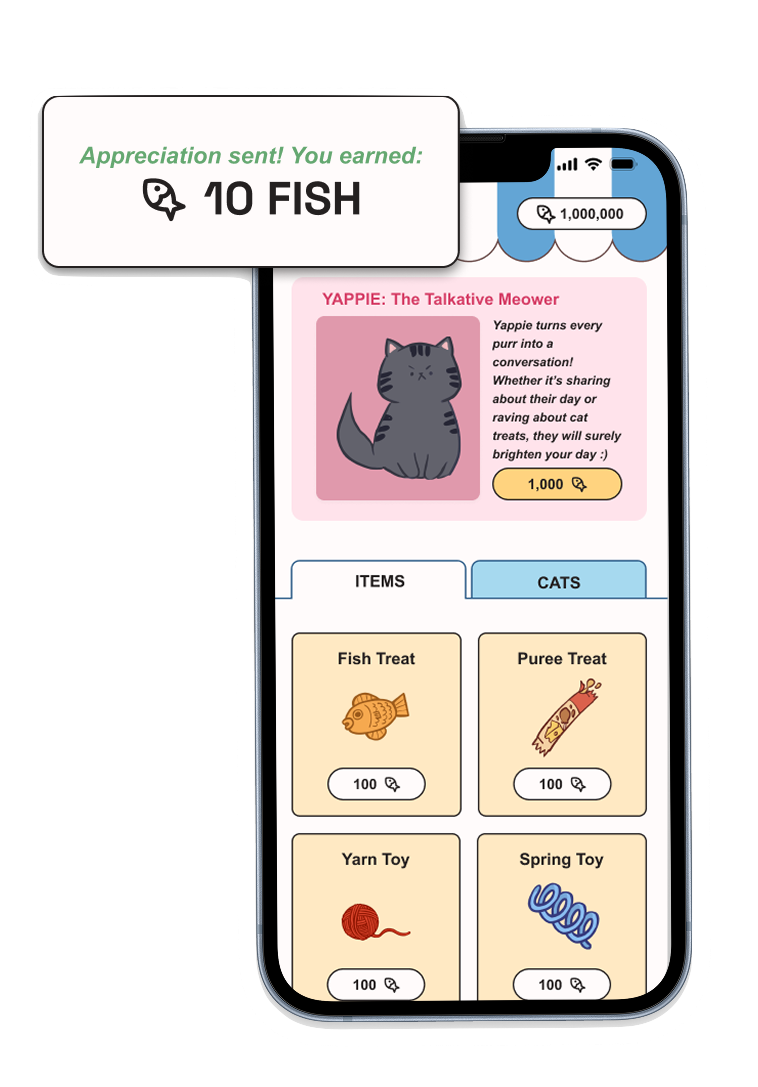
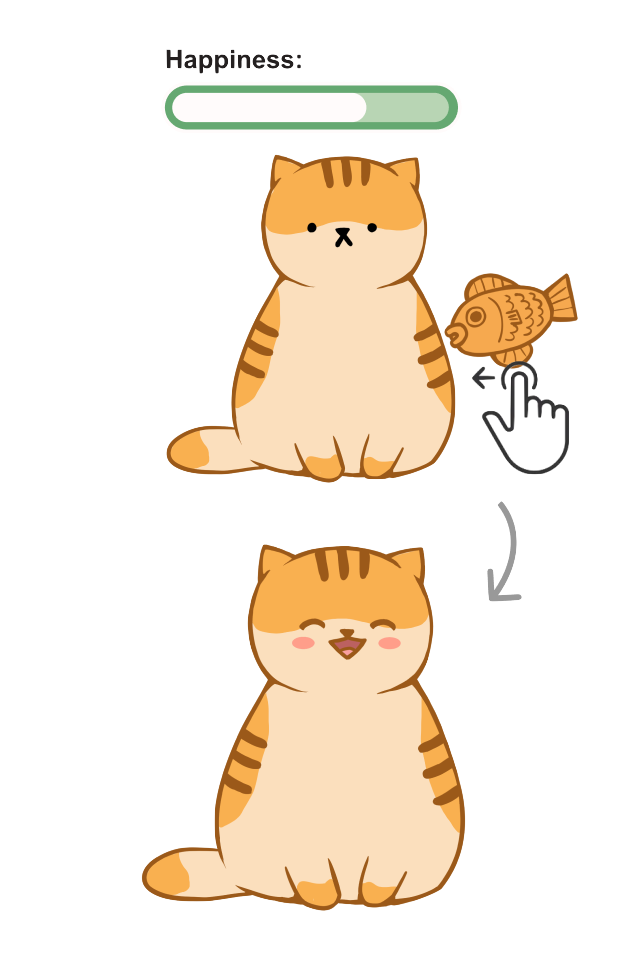
Every gratitude letter earns fish points, which can be used to buy treats and care items for your cat.
By feeding the virtual cat, couples see their pet grow happier and healthier.
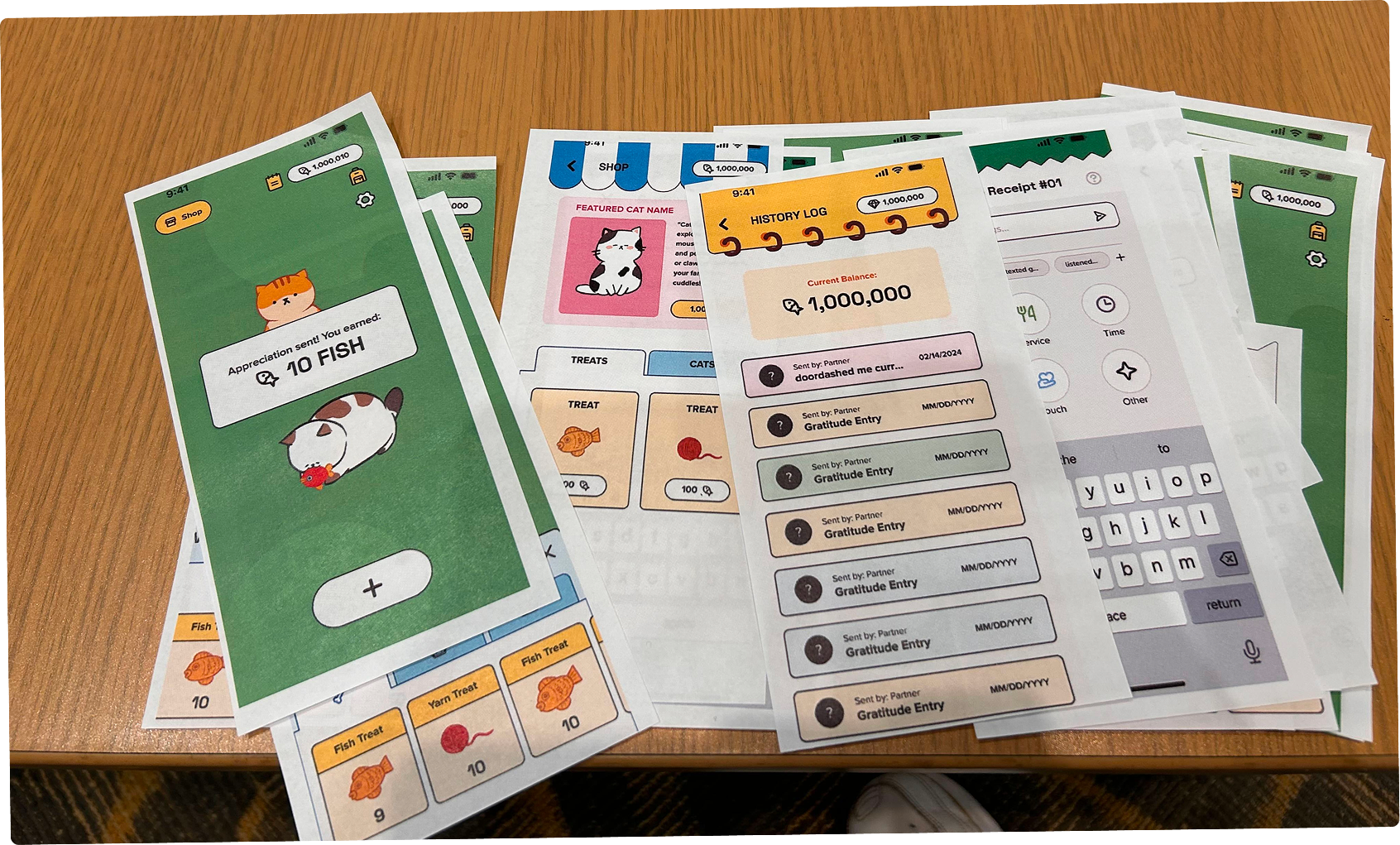
After creating the MVP, I conducted usability testing to gauge user satisfaction and the effectiveness of each feature.

These research insights helped me lead production, allowing me to prioritize features that would have a high impact and low development cost.
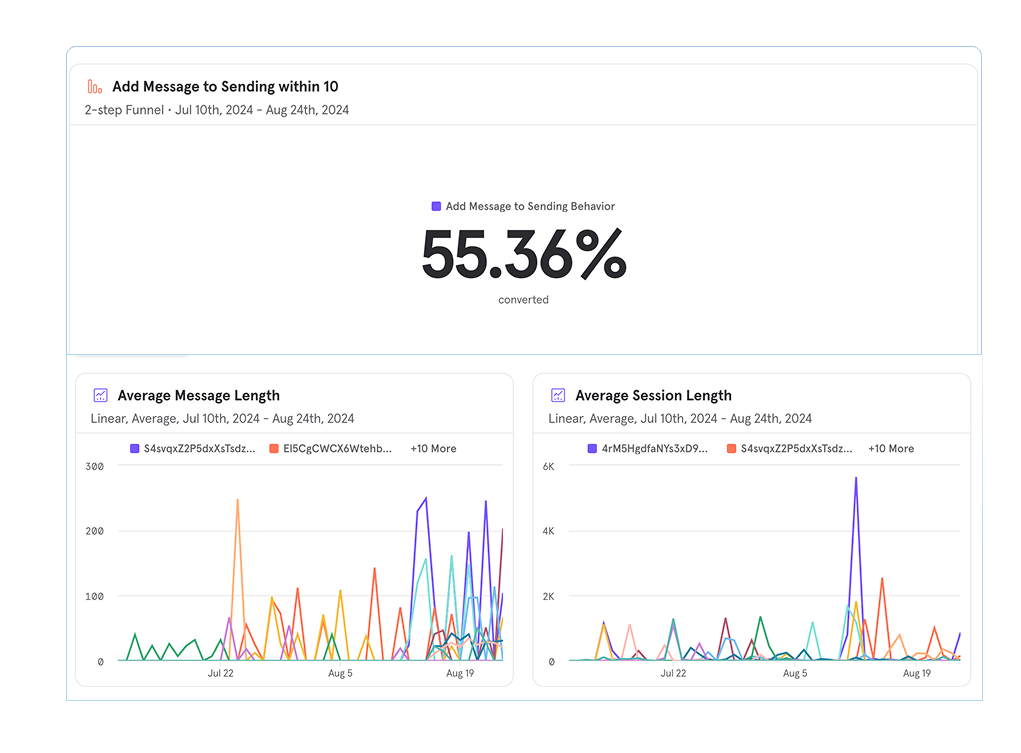
Using Mixpanel, tracked key metrics like user activation and engagement, to refine the app based on their input.
Installs in 1st Month
Notification CTR
Avg. Session
Letters Weekly
Being both a researcher and a co-founder meant I was constantly working alongside product, engineering, and design. I learned to sanity-check ideas early, so research led to features we could actually build.
Balancing curiosity with progress
I learned to right-size my research. Some questions needed deep exploration; others only needed a quick signal. Instead of defaulting to “go deeper,” I chose the level of effort based on what stage we were in and how fast the team needed to move.
Research with purpose
I became intentional about why I was doing each study, clarifying the research goal upfront and asking myself: “Will this question actually help the team make a decislion?"